[hidden] Which Fuel Works Best for Endurance Athletes?
Breaking down the three most popular portable fuels for endurance athletes — and how to pick the right one for you.
If you've ever hit the wall halfway through a long run or ride, you know how quickly energy can disappear.
It's why many sports advice recommends consuming quick-digesting carbs during endurance workouts lasting longer than about 60 minutes.1
And it's also why endurance athletes have been experimenting with portable fuel for decades. When I started training for my first marathon, energy gels were the original go-to. Then energy chews came along, and I was excited. But I quickly understood why they were called chews and not gummies. Now a newer option is gaining traction with runners and cyclists: energy gummies.
Each option can have its place. But depending on your stomach, your pace, your preferences, and the type of workout you're doing, one may work better than the others. Let's break it down.
Why Fuel Matters During Long Workouts [Why fuel matters]
During endurance exercise—especially workouts lasting longer than about 60 minutes—carbohydrates become extra important for maintaining energy levels. And your body typically will first rely on glycogen (stored carbohydrates in your muscles) for energy.1
So the goal isn't just to consume calories while working out. It's to help restore glycogen levels so your body can keep performing efficiently.1 2
That's why most energy fuels are designed to deliver:
- Quick carbohydrates through a fast-digesting carb formula
- At least the three main electrolytes lost while sweating
- Occasionally caffeine
Ideally all in a format that's easy to consume while moving.
 Energy Gels [Energy gels]
Energy gels have been a staple of endurance sports for years. They're concentrated carbohydrate packets designed to deliver quick energy during races and workouts. Usually made of different rapidly absorbed carbohydrate syrups, they have a thicker texture but don't require chewing.
Why Athletes Use Gels
- Fast carbohydrate delivery
- Lightweight and easy to carry
Potential Downsides
- Sticky texture
- Often need water to wash down
- Can feel overly sweet
- Some athletes find them tough on the stomach
For some athletes, gels work perfectly and are the ideal fuel format. For others, the texture or sweetness can be overwhelming – or even cause digestive issues.
Energy Chews [Energy chews]
Energy chews are essentially fast-digesting carbohydrates blocks eaten gradually during activity. Some athletes prefer chews because they feel more like actual food or candy rather than squeezing syrup from a packet, and are just as easy to carry along. Like gels, their main purpose is to provide carbohydrates that help maintain blood glucose and support endurance performance during prolonged exercise.1 2
Why Athletes Use Chews
- Easy to portion during workouts
- Can be more satisfying texture than gels
- Often include electrolytes and caffeine
Possible Drawbacks
- Can get sticky on teeth
- Packs often can't be resealed
- Chews bouncing around in pockets can become stale or sticky
Chews became popular because they made fueling feel a little more natural during longer workouts.

Energy Gummies [Energy gummies]
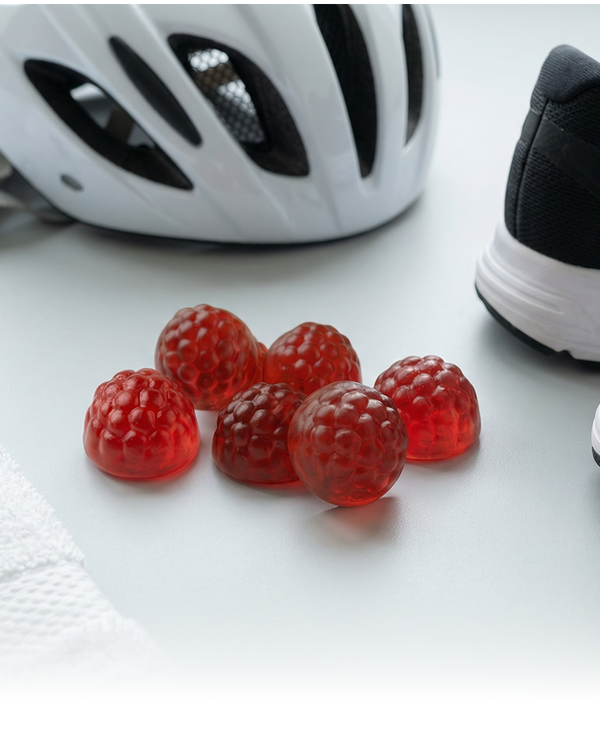
Energy gummies are similar to chews, but typically softer, "bouncier", and easier to eat while moving. They're designed to pair great taste and texture with the benefits of fast-acting energy, electrolytes, and occasionally caffeine.1 3
And since they can seem like candy, energy gummies can strike that balance between performance fuel and something you actually enjoy eating.
Why Athletes Are Gravitating Toward Energy Gummies
- Easy to eat during runs or rides
- No sticky gel or chew texture
- Great taste
- Reliable, quick-acting energy
- Some athletes find them easier to digest
- Combines electrolytes and sometimes caffeine in fun format
A Practical Way to Choose Your Fuel
At the end of the day, most endurance fuels are built on the same basic foundation: fast-digesting carbohydrates to support energy levels, electrolytes to help replace what’s lost through sweat, and sometimes caffeine to support alertness and perceived effort during longer workouts.¹²³
The differences between gels, chews, and gummies are usually less about the core ingredients and more about format, texture, and how your body responds to them.
If you’re deciding which one to use, here’s a simple way to experiment:
Try gels if you want:
- the most compact and concentrated fuel
- something quick to consume during harder efforts
Try chews if you prefer:
- portioning your fuel gradually
- a texture that feels closer to real food
Try gummies if you want:
- something softer and easier to eat while moving
- a format that feels more enjoyable during long sessions
For most athletes, the best approach is to experiment during training, not race day. Try different formats on long runs or rides and pay attention to:
- how easy they are to eat while moving
- how your stomach responds
- whether you actually enjoy eating them mid-workout
Because when fueling feels simple — and even a little enjoyable — you’re far more likely to stay consistent with it during the workouts that matter most.

A More Enjoyable Approach to Workout Fuel
We started building Club Underdogs Energy Gummies around a simple idea: energy fuel should contain science-backed ingredients that support you in a format and flavor that's fun to eat.
Sources
- Thomas DT, Erdman KA, Burke LM. Position of the Academy of Nutrition and Dietetics, Dietitians of Canada, and the American College of Sports Medicine: Nutrition and Athletic Performance. Medicine & Science in Sports & Exercise, 2016
- Kerksick CM et al. International Society of Sports Nutrition position stand: nutrient timing. Journal of the International Society of Sports Nutrition, 2017
- Grgic J et al. Effects of caffeine intake on endurance performance: a systematic review and meta-analysis. British Journal of Sports Medicine, 2020